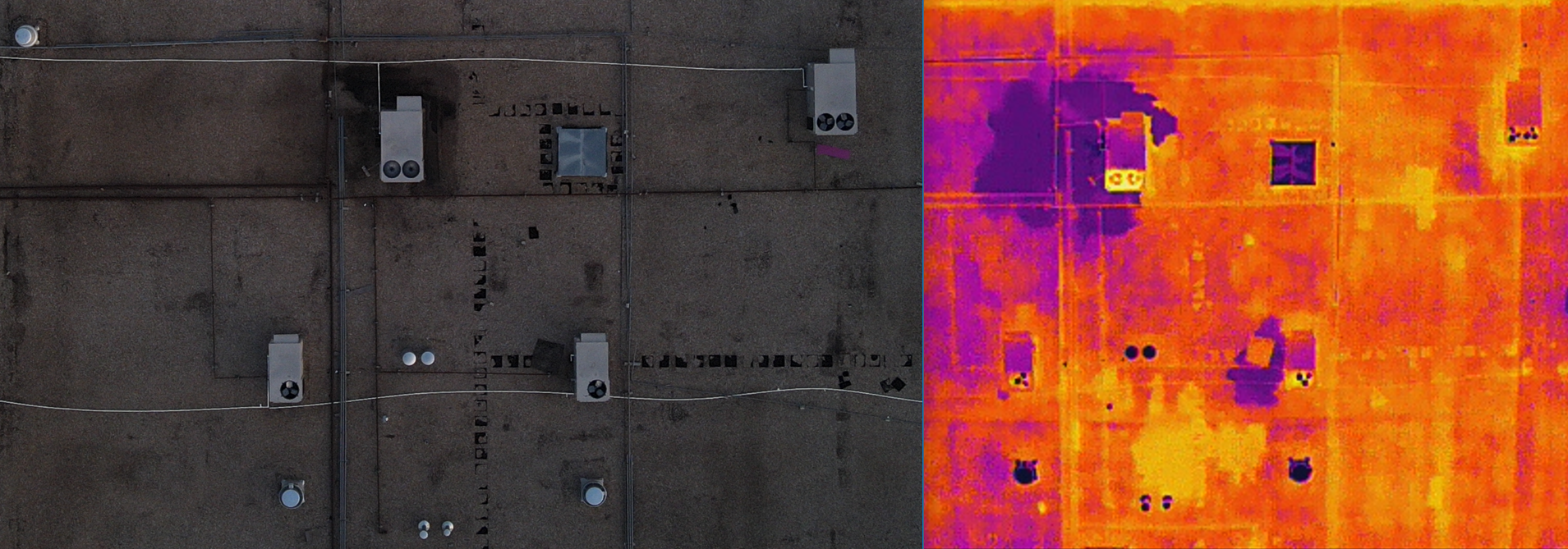
A drone sees the whole roof in one flight: every seam, drain and piece of equipment, plus the thermal picture of what’s happening under the membrane.
AssetRoof flies visual and thermal drone inspections on commercial roofs across Oklahoma and the surrounding region. Licensed sUAS pilot. Level 1 thermographer. IIBEC Registered Roof Observer.
What the drone finds
Visual flight
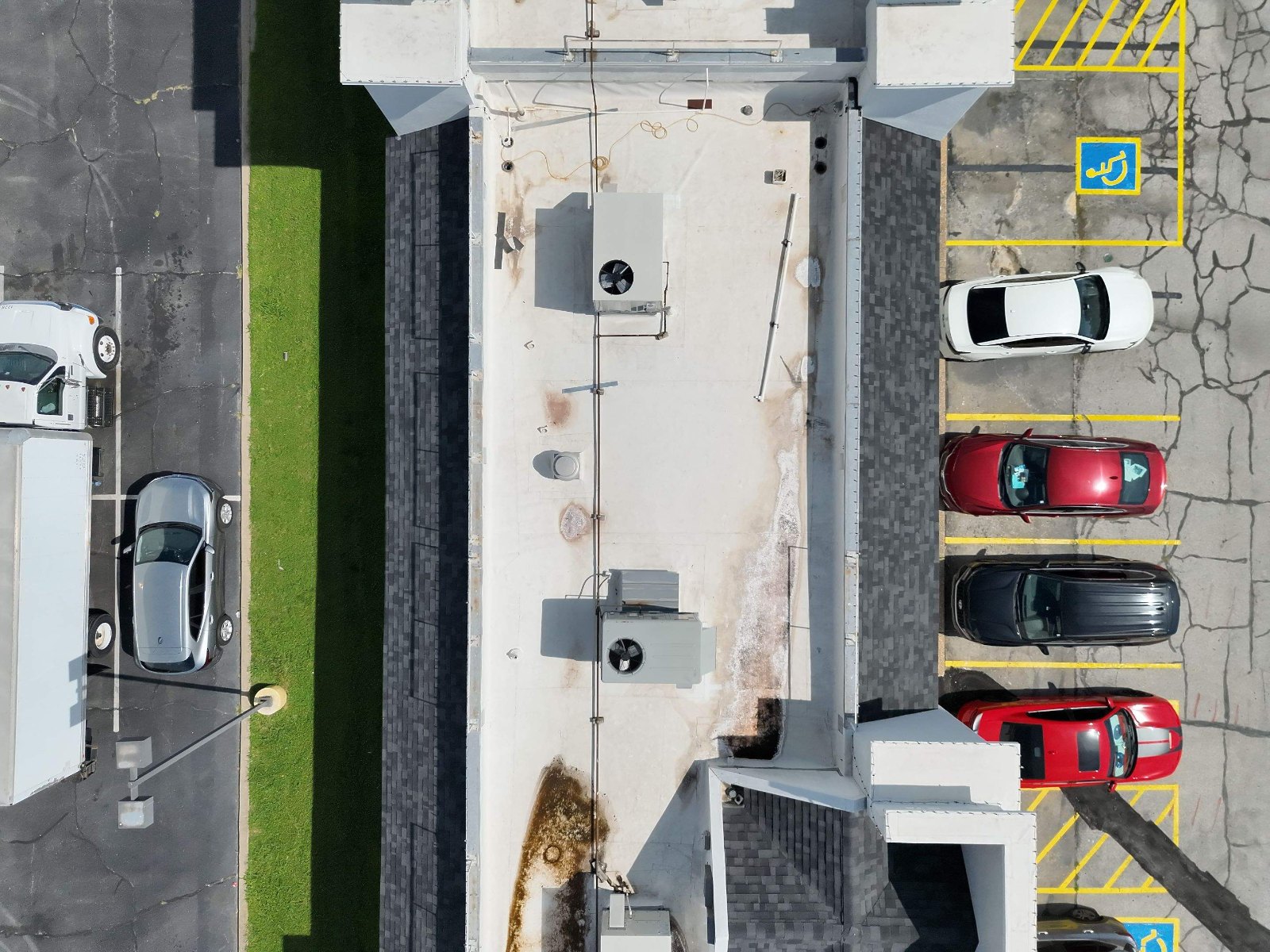
High-resolution photos of the full roof surface: open seams, damaged flashing, blocked drains, debris, ponding and failed repairs. Flights are repeatable, so change between visits shows up.
Thermal flight
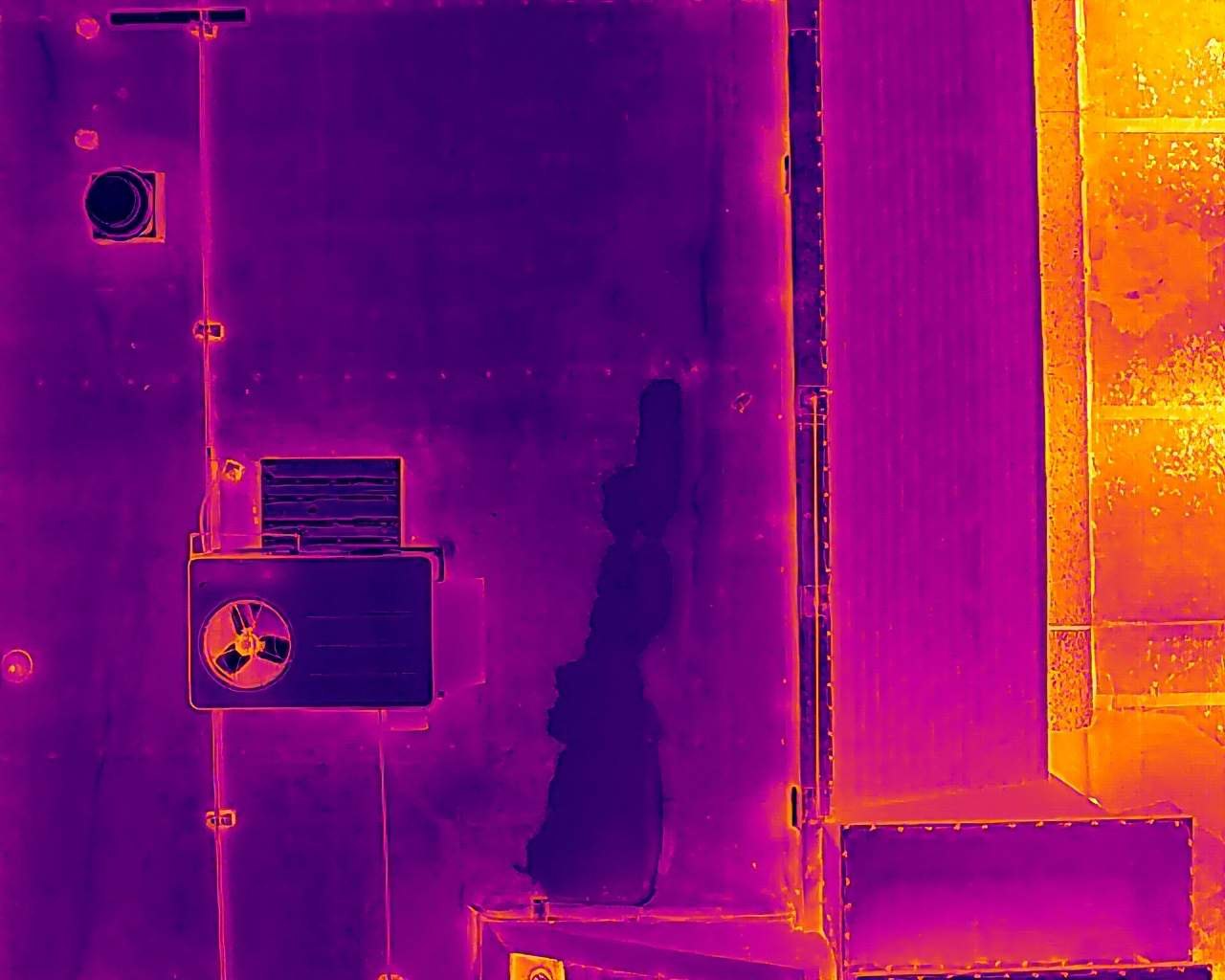
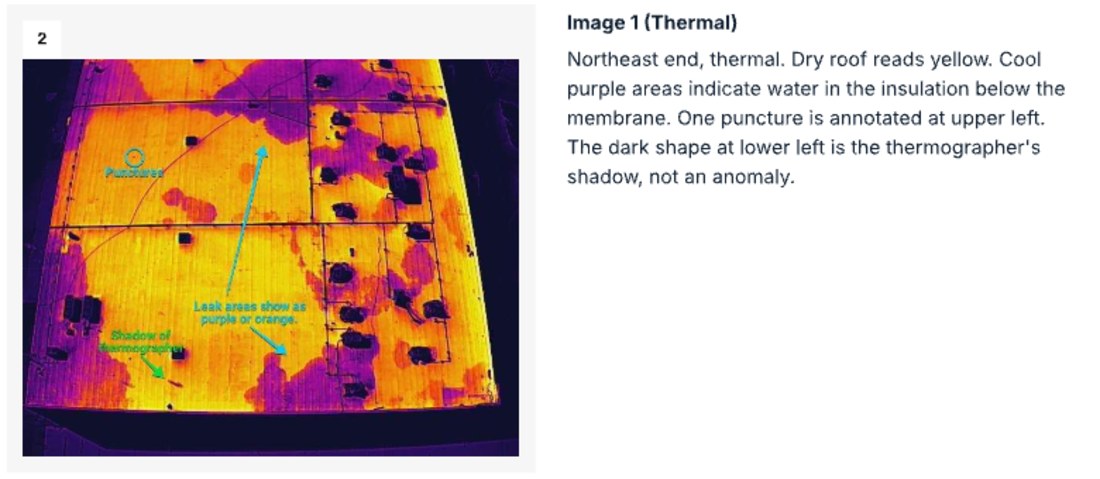
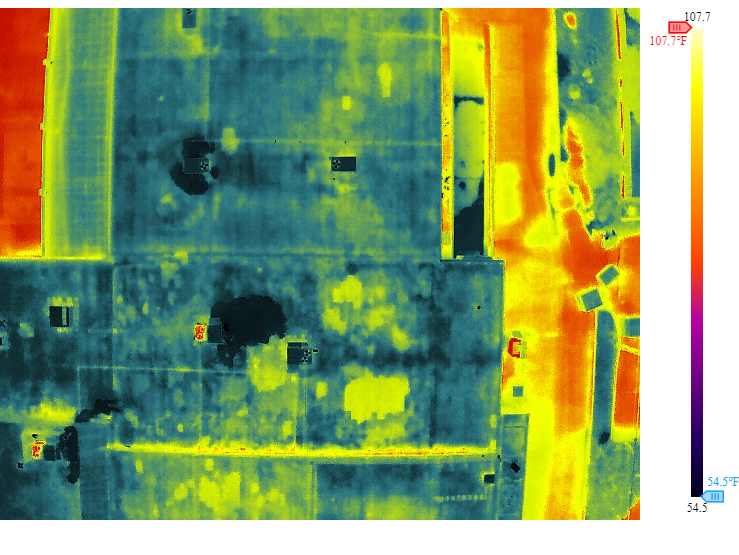
Flown shortly after sunset, when wet insulation holds the day’s heat longer than dry insulation. The scan marks suspected moisture across the whole roof without cutting it open.

Infrared by itself is just a pretty picture
A thermal scan shows temperature. An area that runs warmer or cooler than the roof around it means investigate here.
AssetRoof checks what the drone flags with an on-roof walk and impedance moisture scanning, and the RoofMRI process puts numbers on how wet it is. Then the report tells you what’s wet, how wet and what to do about it.
What you get back
- Visual and thermal imagery of the full roof
- Suspected moisture areas marked on the roof
- On-roof verification of what the scan flags
- Findings in plain language, worst problems first
- Flight conditions and anything the scan couldn’t cover
One flight or a standing watch
One flight answers one question: where’s the water, what did the storm do, is this roof worth keeping. Flown on a schedule, the drone builds a record. Each flight gets compared to the last, so a problem shows up while it’s still small.
When drone thermal works best
Thermal needs the right conditions: sun during the day, a dry roof surface and a flight shortly after dusk. Fresh rain, ballast, gravel and some coatings can hide a moisture signature or fake one.
The flight conditions go in the report, because they change how far the scan can be trusted.

Know where your roof stands.
If you’re responsible for a commercial roof, or a whole portfolio, AssetRoof can tell you where it stands, what it needs and when.
Pay attention to the roof five years early, or pay the contractor five years late.